Fuel Sensor Accuracy Midrand: Why Calibration Matters
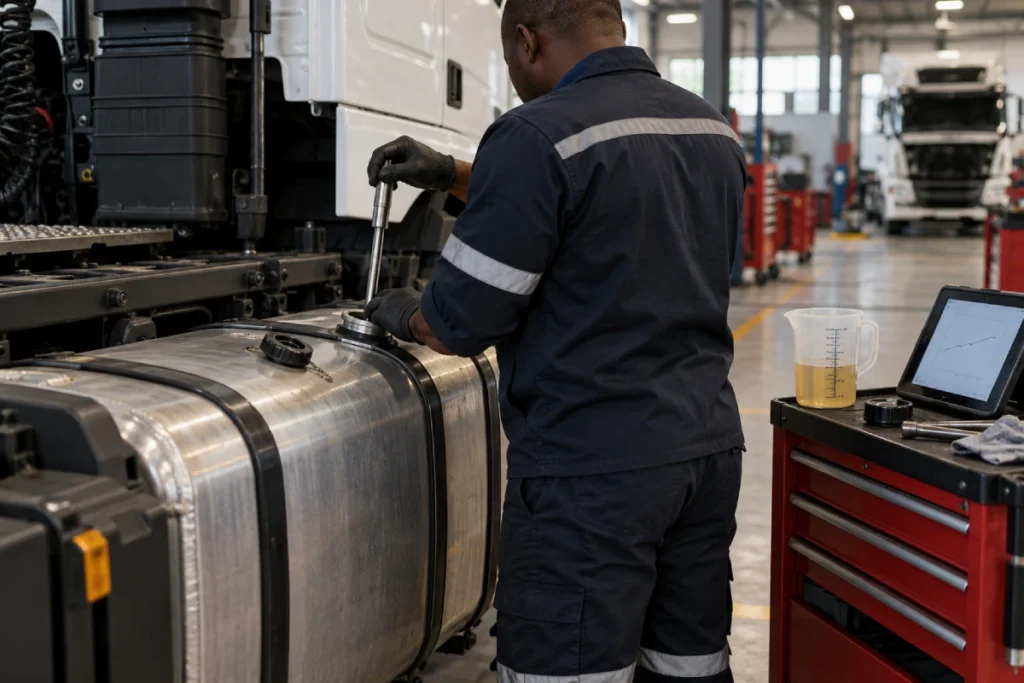
Fuel sensor accuracy is the question every Midrand fleet manager should ask before trusting a fuel report, because a sensor doesn’t measure litres. It measures the height of fuel in the tank. Turning that height into litres accurately depends on calibration and installation far more than on the sensor itself.
Why a level reading isn’t a litre figure
Truck tanks are rarely simple boxes. They have rounded corners, baffles, steps and tapered ends, so a centimetre of fuel near the bottom holds a different volume from a centimetre near the top. A sensor that reads perfectly will still give wrong litres if the system assumes the tank is a simple shape.
Improving fuel sensor accuracy in Midrand: calibrate every tank
The answer is to calibrate each tank individually: fill it in measured steps and record the level at each step, so the system has a table that converts that tank’s level readings into litres. Two trucks of the same model can still need separate tables if their tanks differ.
Other things affect the reading too:
- Movement. Fuel sloshes when a truck brakes, climbs or corners, so readings need filtering, and alerts should rely on stable readings when the vehicle is stationary.
- Slope. A truck parked on a slope reads differently at the sensor than on level ground.
- Temperature. Diesel expands as it warms, so the same fuel reads slightly higher in the afternoon than at dawn.
- Installation. The sensor has to sit square in the tank, at the right position, with a sealed and secured fitting.
Why accuracy matters beyond theft alerts
Accurate litres are what make the data useful as evidence. A siphoning alert has to be trusted before anyone acts on it, and for mining, farming and forestry operators the same readings support SARS diesel refund records. SARS checks claimed litres against what was bought, so a system that reports wrong litres is a liability. Digit PRS uses calibrated fuel data when it prepares and reviews diesel refund claims.
What to ask your installer
- Is every tank calibrated individually, and can I see the calibration table?
- How are readings filtered while the truck is moving?
- How are fills and sudden drops detected and reported?
- What happens to calibration if a tank is replaced or repaired?
Digit PRS installs Digit D-Fuel truck fuel monitoring from Gateway West in Midrand. DigitFMS head office explains the detail in why the tank reading is not litres, and the range is on the national fuel monitoring page. To discuss a fleet, contact our team.